Clichés et récits inédits : un livre offre un regard neuf sur la présence américaine en Vendée en 1918
Riche de 330 images, l'ouvrage « Le camp américain 1918 » dévoile de nombreuses photographies inédites issues des archives militaires et de la presse américaine. Il retrace la vie des soldats dans le camp et leurs relations avec la population locale, à la fin de la Première Guerre mondiale.
Guillaume Robelet — Publié le 19/04/2026

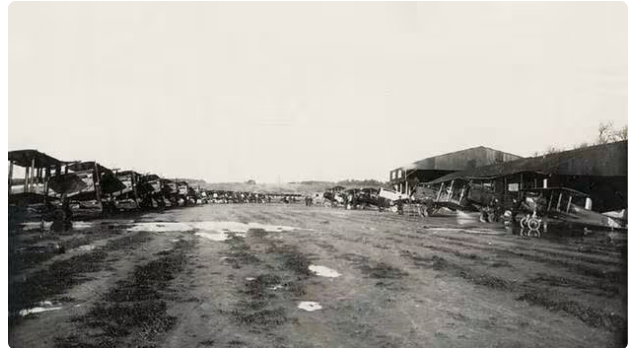
Les avions stationnés dans le camp de Saint-Hilaire / Saint-Jean-de-Monts, en 1918. | NARA
Aircraft parked at the Saint-Hilaire / Saint-Jean-de-Monts airfield, 1918. | NARA
Tout est parti d’une brochure réalisée en 2017, sur le centenaire de l’arrivée des Américains en Vendée. Elle contenait notamment le témoignage de Joseph Thibaud, curé doyen de la paroisse de Saint-Jean-de-Monts à l’époque, avec une trentaine de photographies, explique Patrick Avrillas, président de l’association Histoire, culture et patrimoine des pays de Rié et de Vie. Comme les sources manquaient, une équipe de l’association s’est penchée très sérieusement sur le sujet, ce qui donne aujourd’hui ce bel ouvrage. Les sources américaines ont été particulièrement utilisées. Il s’agit essentiellement des fonds de la Nara, National archives and records administration.
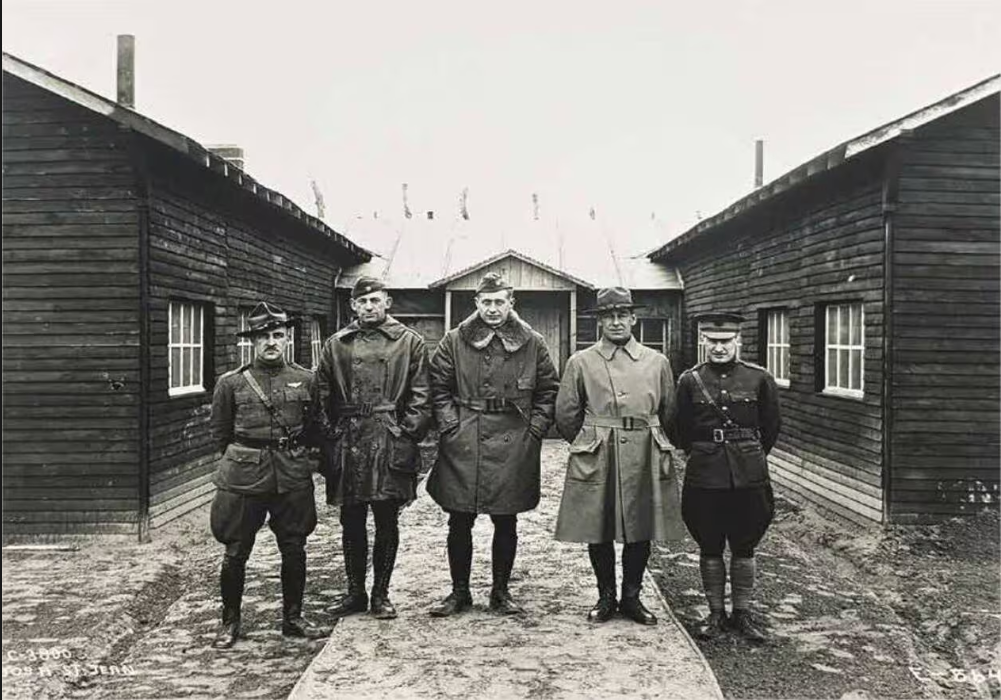
Le colonel Leslie MacDill et son état-major, à l’intérieur du camp. | NARA
Colonel Leslie MacDill and his staff, inside the camp. | NARA
Des centaines de clichés inédits
À une époque où la guerre aérienne est à ses débuts, les Américains construisent à la hâte un camp aérien long de 2 kilomètres, en 1918, dont les trois quarts sont situés à Saint-Hilaire-de-Riez et le reste à Saint-Jean-de-Monts. Sur tout le littoral, c’était le meilleur terrain. Le camp rassembla jusqu’à 2 500 sammies (surnom amical donné aux soldats américains lors de la Première Guerre mondiale) et près de 200 biplans. Le camp servait d’école de tir, mais aussi d’armurerie et le chef se nommait Leslie MacDill, un colonel réputé qui a donné son nom à une base aérienne en Floride.
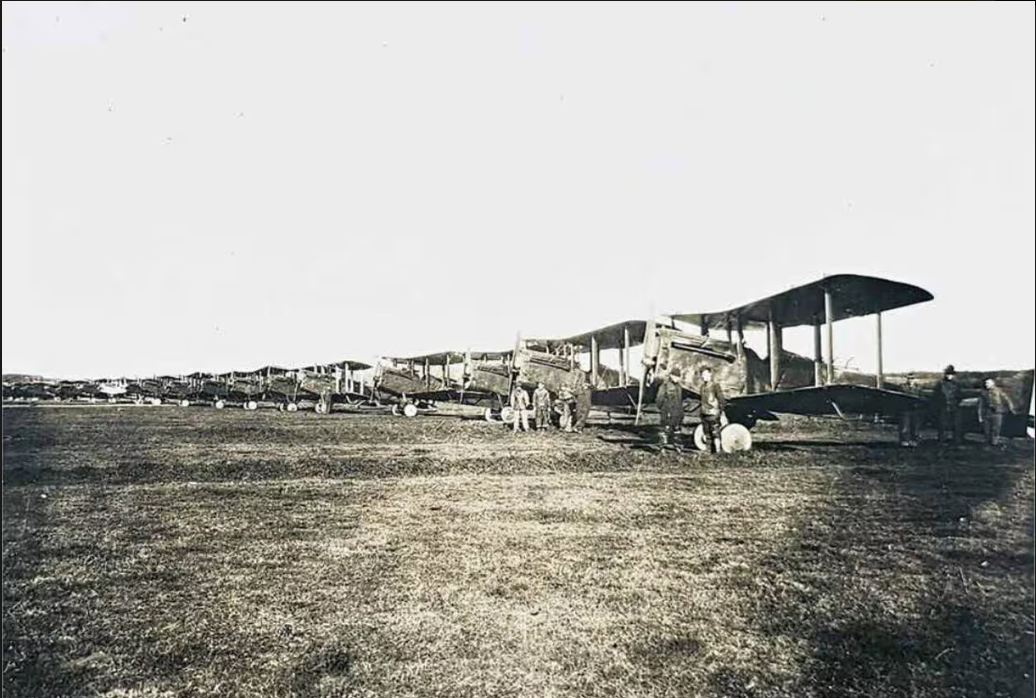
Des avions Liberty prêts à décoller, au pied des dunes de Saint-Hilaire-de-Riez. | NARA
Liberty aircraft ready for take-off, at the foot of the dunes at Saint-Hilaire-de-Riez. | NARA
La force de ce livre réside notamment dans sa riche iconographie, avec 330 images dont la plupart sont inédites. Cela, grâce au travail de Tony Erceau, chercheur indépendant et membre de l’association. Il n’a d’ailleurs pas hésité à se rendre à Washington, où il a exhumé une collection de plusieurs centaines de photographies conservées à la bibliothèque du Congrès, où se trouve la Nara. Je me suis aussi rendu à la bibliothèque Morris de Carbondale, dans l’Illinois, qui détient un album de 154 clichés du camp, explique Tony Erceau.
Maraîchins et Américains : deux univers se côtoient
À cela s’ajoute le travail de recherche de René Doudard, qui s’est plongé dans le journal interne du camp, The Fly Paper, et dans la presse américaine de l’époque. C’est une chance d’avoir ce journal, il paraissait chaque semaine et était imprimé à Nantes, précise René Doudard. À cela s’ajoutent les lettres que les soldats envoyaient à leurs familles et qui étaient publiées dans la presse américaine.
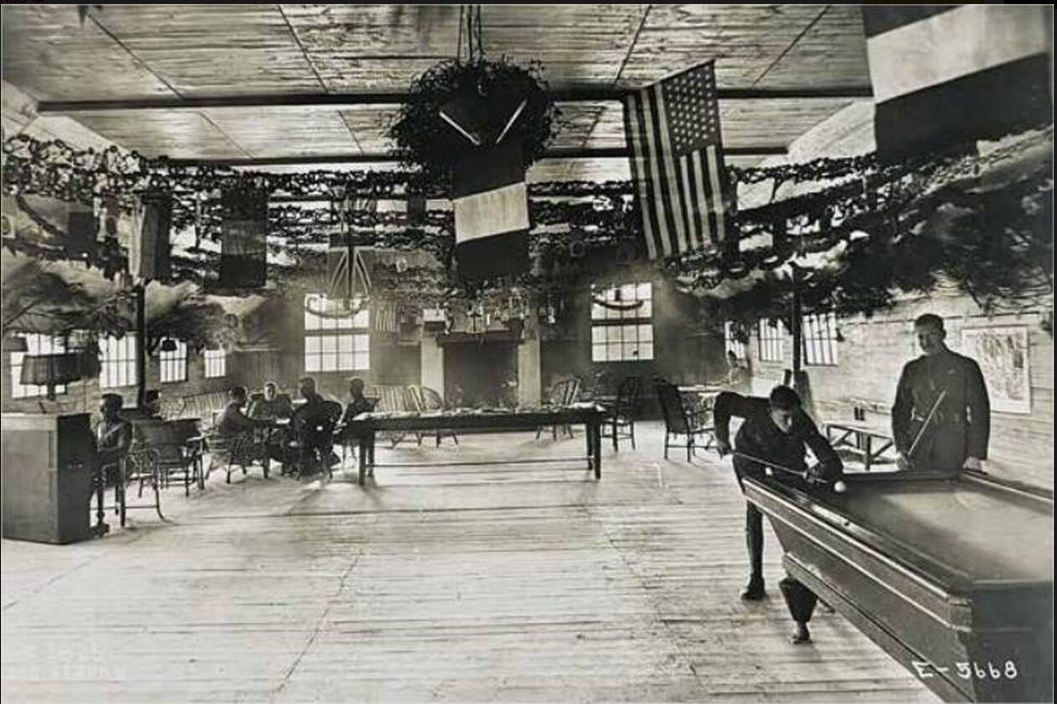
L’intérieur du club des officiers, avec piano et billard. | NARA
The interior of the officers’ club, with a piano and a billiard table. | NARA
Cela met en lumière la vie au camp, mais aussi les relations avec la population locale. Deux mondes se rencontraient. Les Américains avaient du thé, du chocolat ou des cigarettes. Ils avaient aussi de belles chaussures, alors que la population maraîchine marchait en sabots. Le livre relate aussi l’histoire de certaines maraîchines qui eu des liaisons amoureuses avec des sammies et qui sont allées s’installer aux Etats-Unis.
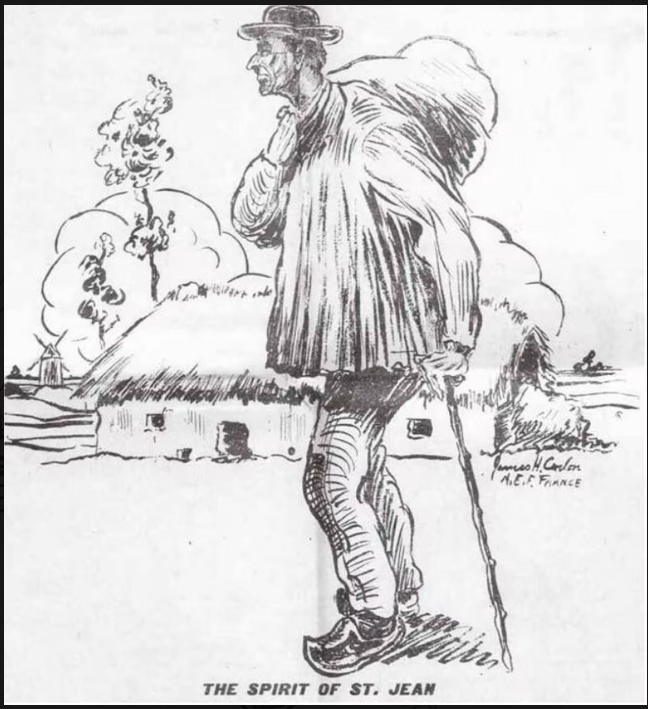
Un Montois dessiné dans le journal du camp The Fly Paper. Avec la présence américaine, deux civilisations se côtoyaient. DR
A man from Saint-Jean-de-Monts depicted in the camp newspaper *The Fly Paper*. With the American presence, two civilisations coexisted.
Le camp est démantelé en mars 1919, quelques mois après l’armistice du 11 novembre 1918.
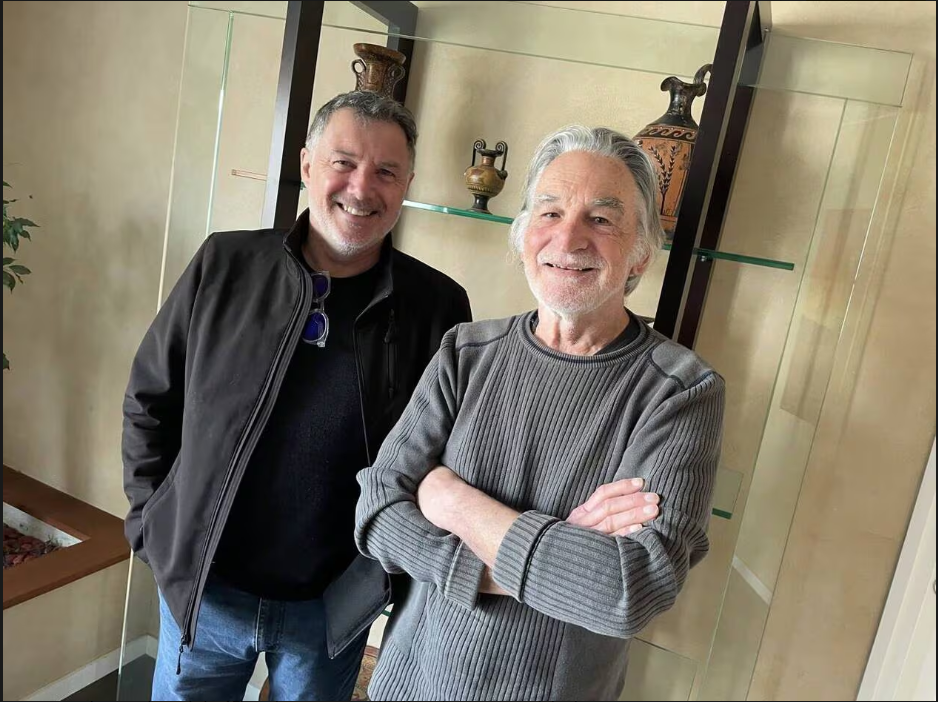
Tony Erceau et René Doudard ont largement contribué à la réaalisation de l'ouvrage qui sortira le 1er mai prochain.
Tony Erceau and René Doudard have made a significant contribution to the book, which is due to be published on 1 May. | OUEST-FRANCE
Le week-end du 1er mai, une reconstitution du camp américain par une association spécialisée sera organisée, autour de la mairie annexe, dans le quartier des Demoiselles, à Saint-Hilaire. Un chemin de mémoire va être installé à partir du 1er mai, en hommage aux 28 soldats qui ont péri sur le camp. Les décès ont été causés par des accidents, mais aussi par la grippe espagnole.
le livre sur le camp américain parait en mai, si vous le souhaitez vous pouvez le réserver.
« Le camp américain 1918, Saint-Hilaire-de-Riez, Saint-Jean-de-Monts », 224 pages, sortie le 1er mai au prix de 35 €. Éditions La Geste.
English Version
Unpublished photographs and accounts: a book offers a fresh perspective on the American presence in the Vendée in 1918
Featuring 330 images, the book *Le camp américain 1918* reveals numerous previously unpublished photographs from military archives and the American press. It traces the lives of the soldiers in the camp and their relations with the local population at the end of the First World War.
It all began with a brochure produced in 2017 to mark the centenary of the arrival of the Americans in the Vendée.
It included, in particular, the account of Joseph Thibaud, senior priest of the parish of Saint-Jean-de-Monts at the time, along with some thirty photographs, explains Patrick Avrillas, president of the association Histoire, culture et patrimoine des pays de Rié et de Vie. As sources were scarce, a team from the association undertook a thorough investigation of the subject, resulting in this fine volume. American sources were used extensively. These consist mainly of the collections of the NARA (National Archives and Records Administration).
Hundreds of previously unpublished photographs
At a time when aerial warfare was in its infancy, the Americans hastily built a 2-kilometre-long airfield kilometres in 1918, three-quarters of which were located in Saint-Hilaire-de-Riez and the rest in Saint-Jean-de-Monts. It was the best site along the entire coastline. The camp housed up to 2,500 ‘sammies’ (a friendly nickname given to American soldiers during the First World War) and nearly 200 biplanes. The camp served as a shooting range, but also as an armoury, and its commander was Leslie MacDill, a renowned colonel after whom an air base in Florida is named.
The strength of this book lies notably in its rich illustration, with 330 images, most of which have never been published before. This is thanks to the work of Tony Erceau, an independent researcher and member of the association. He did not hesitate to travel to Washington, where he unearthed a collection of several hundred photographs held at the Library of Congress, where the NARA is located. I also visited the Morris Library in Carbondale, Illinois, which holds an album of 154 photographs of the camp, explains Tony Erceau.
Maraîchins and Americans: two worlds come together
Added to this is the research work of René Doudard, who immersed himself in the camp’s internal newspaper, The Fly Paper, and in the American press of the time. It’s a stroke of luck to have this newspaper; it was published weekly and printed in Nantes, explains René Doudard. Added to this are the letters that the soldiers sent to their families, which were published in the American press. This sheds light on life in the camp, but also on relations with the local population. Two worlds met. The Americans had tea, chocolate and cigarettes. They also had smart shoes, whereas the local women walked in clogs. The book also recounts the stories of certain local women who had romantic liaisons with GIs and went on to settle in the United States.A man from Mont-de-Marsan depicted in the camp newspaper The Fly Paper. With the American presence, two civilisations coexisted.
The camp was dismantled in March 1919, a few months after the armistice of 11 November 1918. Tony Erceau and René Doudard contributed significantly to the production of the book, which is due to be published on 1 May.
On the weekend of 1st May, a re-enactment of the American camp by a specialist association will be organised around the annexe to the town hall, in the Demoiselles district of Saint-Hilaire. A memorial trail will be installed from 1May, in tribute to the 28 soldiers who died at the camp. The deaths were caused by accidents, but also by the Spanish flu.